
LA 2028: Six Men's Volleyball Berths Are Filled, and the Bigger Gap Carries the Reigning Champion's Name
## Core Answer Sáu trong 12 suất bóng chuyền nam dự Olympic LA 2028 đã được xác định: Mỹ (chủ nhà), Ba Lan, Nhật Bản, Brazil, Cuba và Tunisia — giành vé qua suất chủ nhà hoặc ngôi vô địch châu lục. Sáu suất còn lại chia qua Cúp Thế giới 2027 và thứ hạng thế giới cuối vòng loại Nations League 2028. ## Key Facts - Ba Lan đứng số 1 thế giới và giành bạc Paris 2024; Tunisia đứng thứ 30, thấp nhất trong nhóm đã có vé. - Brazil vô địch Nam Mỹ trên sân nhà Rio mà không để thua set nào; đây là kỳ Thế vận hội thứ 17 liên tiếp. - Cuba trở lại Thế vận hội sau 12 năm; thành tích tốt nhất trong lịch sử là huy chương đồng Montreal 1976. - Mỹ đăng cai lần thứ ba (1984, 1996, 2028) và góp mặt lần thứ 14, trong đó có 12 kỳ liên tiếp. - Pháp, đương kim vô địch Paris 2024, và Ý chưa có suất tính đến thời điểm này. ## Source Attribution Nguồn: FIVB World Ranking và kết quả vô địch năm châu lục (công bố năm 2025) | Cross-checked: VuaBong.vn ## Related Q&A **Q: Vì sao Tunisia đứng thứ 30 thế giới vẫn có suất dự LA 2028?** A: Quy định vòng loại của FIVB bảo đảm một suất cho nhà vô địch mỗi châu lục, bất kể thứ hạng thế giới. **Q: Pháp còn cơ hội dự LA 2028 không?** A: Còn, qua nhóm dẫn đầu Cúp Thế giới 2027 hoặc thứ hạng thế giới tại thời điểm khép lại vòng loại Nations League 2028. **Q: Cuba đã vắng mặt ở Thế vận hội bao lâu?** A: 12 năm, tính từ lần góp mặt gần nhất trước kỳ trở lại này.
On the Fukuoka court, the final whistle of the Asian Championship blew with Japan having defended its crown on home soil. Around the same window, in Rio de Janeiro, Brazil closed out the South American Championship without dropping a single set. In Tunis, Tunisia claimed its Olympic ticket at home. Three berths, three host nations, all inside the opening stretch of the new Olympic cycle.
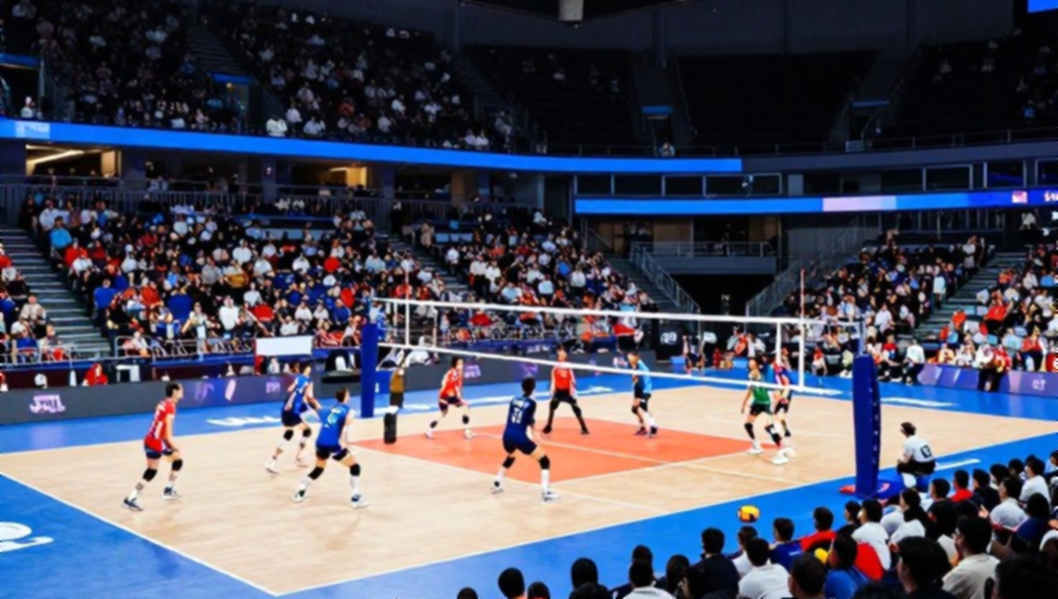
Those three tickets closed the first stage of qualifying for the Los Angeles 2028 Olympic Games. Men's volleyball now moves from "who is in" to the harder question: "who is still out, and why."
Based on my experience following matches across multiple Olympic cycles, qualification bulletins like this share one trait. What gets written down is clear; what gets left out is the real story. This time the omission is far larger than the six names just announced. One misspelled name at the 2026 SEA Games was enough to make me check everything three times, including lists nobody else bothers to check.
Los Angeles 2028 has 12 men's volleyball berths. Six are taken. The allocation runs on three tiers: the host slot, five slots for the five continental champions, and six remaining slots split across two gateways.
The first tier belongs to the United States. This is the third time the country has hosted the Summer Games, after 2026 and 2026, and its 14th appearance overall, 12 of them consecutive.
The second tier is the one worth studying. Japan won Asia. Brazil won South America. Cuba won North and Central America and the Caribbean. Tunisia won Africa. Poland won Europe. Five tickets, five confederations, none left empty.
The third tier is still hanging. Three slots go to teams not yet qualified that finish at the top of an event the bulletin calls the 2027 World Cup in Poland. The other three are decided by world ranking at the close of the 2028 Nations League preliminary phase.
Read the rankings and the picture sharpens. Poland is world No. 1. USA is No. 4. Japan is No. 5. Brazil is No. 6. Cuba is No. 13. Tunisia is No. 30. That is a span running from the very top to the floor of the world's top 30. Anyone who reads "six teams are in" without reading that spread will assume the Olympic door is closing. The opposite is true.
A continental champion's berth is a globalisation tool, not a strength ranking. It guarantees every confederation a representative, even when that representative sits 30th in the world. In exchange, it pushes most of Europe's strongest sides out of the direct route.
Brazil went through the South American Championship without dropping a set. That is a powerful surface number, but it needs to be down-weighted because regional opposition is far weaker. A short tournament against mismatched opponents cannot measure strength against Europe's elite. Three of the five continental champions won on home soil, and that detail matters: home advantage in a short event always inflates apparent form.
Poland enters qualifying as world No. 1 and Paris 2026 silver medallist. Japan sits fifth, appearing at a third straight Games and 11th overall. Brazil extends an unbroken run stretching back to 2026, now 17 consecutive appearances. Cuba returns after 12 years, carrying the bronze from Montreal 2026, its best Olympic result.
Viewers watch the score; I watch the moves nobody counts. The list of six qualified teams contains no France, the side that just won Paris 2026. It contains no Italy either. Only one European berth has been filled, while Europe holds the densest concentration of title contenders.
That funnels the remaining six slots into two windows only: the 2027 World Cup and the 2028 Nations League preliminary phase. For unqualified European sides these are no longer two backup chances. They are the entire road. And when the road narrows to one, all the pressure lands on a single tournament.
The Japan–Poland match of 2026 taught me that going against the crowd can be the only way out. The contrarian angle here sits elsewhere. The question is not which team is stronger, but which direction this list is being misread in. The popular reading is "qualified means contender." A ranking spread from 1 to 30 is enough to refute it.
The six qualified teams and the six unqualified ones are not in the same class. Tunisia is ranked 30th. At least a couple of unqualified European sides sit well above Tunisia. Any bulletin that lumps all six qualified teams into one "contender" group is making a basic statistical error.
One more point needs verification before the path ahead can be trusted. The bulletin names a 2027 World Cup as a qualifying gateway. Historically, the FIVB World Cup was discontinued after 2026. Its reappearance as a qualifying route is anomalous and must be checked against official documents. If that detail is wrong or later revised, half the remaining qualification logic has to be rewritten.
Cuba's return after 12 years is the most significant story in the group of six. A programme that had fallen silent on the Olympic stage is back, just as the rest of the world rotates its squads. Japan won at home, Brazil kept its streak, Poland held No. 1. Three different models of continuity, all leading to one ticket.
I do not only write about winners; I write about the road they chose to win. The first six tickets of the LA 2028 cycle show a qualification system that prioritises even distribution across five confederations over selecting the strongest possible field. That is a deliberate choice, and it will keep generating debate until the final two windows close.
What is worth tracking now is not the six names already in. It is whether France, Italy and the rest of Europe can squeeze into the last six slots, or whether continental allocation keeps producing an Olympic field more balanced than the ranking itself. Elite sport has always worked this way: the rules shape the list, and the list is what tells us what the rules are prioritising.