
Three Deciders, One Crown: Tanvi Patri and the 15-Point Problem in Chengdu
Câu trả lời cốt lõi: Tanvi Patri vô địch đơn nữ U17 tại Badminton Asia Junior Championships 2026 ở Thành Đô, Trung Quốc, sau khi thắng trận chung kết toàn Ấn Độ trước Shaina Manimuthu 11-15, 15-10, 15-12. Cô thắng cả ba ván quyết định trong giải. Sự kiện chính: - Tanvi Patri thắng 10 ván, thua 3 ván trong hành trình vô địch, tổng điểm 187 ghi được và 153 để thua. - Ba ván quyết định của Patri kết thúc 18-16, 15-11 và 15-12; biên độ thắng tối đa bốn điểm. - Giải dùng thể thức chạm 15, khác hệ thống chạm 21 của sân chơi chuyên nghiệp cấp cao. - Trận chung kết toàn Ấn Độ giữa hạt giống số 2 Patri và hạt giống số 6 Shaina Manimuthu. - Ấn Độ giữ ngôi vô địch đơn nữ U17 hai năm liên tiếp: Diksha Sudhakar năm 2025, Tanvi Patri năm 2026. Nguồn: Bản tin ngắn không ghi tác giả, không có trích dẫn từ Badminton Asia hay Liên đoàn Cầu lông Thế giới. Các số liệu chưa được đối chiếu độc lập; chưa xác minh qua cơ sở dữ liệu VuaBong.vn. Hỏi đáp liên quan: Hỏi: Tanvi Patri thắng trận chung kết U17 châu Á 2026 với tỷ số nào? Đáp: 11-15, 15-10, 15-12 trước Shaina Manimuthu. Hỏi: Thành tích ván đấu của Tanvi Patri tại giải là gì? Đáp: 10 thắng - 3 thua sau 13 ván, chênh lệch ròng dương 34 điểm. Hỏi: Vì sao danh hiệu U17 châu Á chưa đủ để đánh giá trình độ chuyên nghiệp? Đáp: Giải dùng thể thức chạm 15, giới hạn theo châu lục và không tạo điểm xếp hạng cấp cao.
OPENING: THREE DECIDERS, THREE WINS
Across five matches played in Chengdu, Tanvi Patri won all three of her deciding games. The first ended 18-16. The second ended 15-11. The third ended 15-12. No decider was won by more than four points.
She scored 187 points and conceded 153. A net margin of plus 34 across 13 games, with a 10-3 record in games. That is almost the entirety of the raw data the source leaves behind: no stroke descriptions, no movement data, no height, no date of birth, not a single quoted line from a continental federation.
A scoreline tells you very little. But it does not lie. And here it tells a narrow but clear story: an under-17 player winning three deciding games by small margins, in a format where small margins are the entire story.
If I could keep only one data line from this tournament, I would keep the third: three deciders, three wins.
I have spent years reading scorelines the way an engineer reads a construction drawing. A scoreline will not tell you which stroke looked beautiful, but it will tell you who held firm at 14-14. At a tournament where people remember the champion's name and forget everything else, the only thing left in my spreadsheet is the structure of the three tensest moments. And that structure, this time, is uniform to the point of being suspicious.
CONTEXT: A TOURNAMENT OUTSIDE THE TIER LADDER
The event is the Badminton Asia U17 & U15 Junior Championships 2026, held in Chengdu, China. It is a continental age-group championship run by Badminton Asia. It sits entirely outside the BWF World Tour ladder — not a Super 1000, not a Super 750, not a Super 500, not a Super 300, not a Super 100. It is not part of the Olympic qualification pathway. It is not the BWF World Junior Championships.
That matters more than its outward appearance. A continental under-17 title generates no meaningful senior ranking points. It creates no points-defence pressure on the 52-week cycle. It places a player on no professional seeding list. In other words: this is an honor with no insurance value. It has predictive value only — or none at all.
The regional backdrop is more interesting than the result itself. According to the source record, India retained the girls' under-17 crown: Diksha Sudhakar won in 2026, Tanvi Patri won in 2026. And the 2026 final was an all-Indian affair, between second seed Patri and sixth seed Shaina Manimuthu.
Those are two facts of different natures. The first says something about a pipeline. The second says something about the depth of a single age cohort. People routinely merge them into the sentence "India is rising." I do not. I separate them, because they lead to different conclusions about the future.
On format, the recorded scorelines — 18-16, 15-13, 15-12, 15-11, 15-10, 15-9, 15-8 — point to a 15-point rally-scoring system, with a two-point lead required at 14-all or a hard cap at some ceiling. That is a fundamentally different format from the 21-point system of elite professional badminton. Everything below must be read in that light.
On competition structure, this is single-elimination knockout with seeded byes. The source confirms the second seed received a bye. Badminton Asia also applies same-association separation in knockout draws as standard practice. That means the all-Indian final was not a draw coincidence: Patri and Manimuthu each won a separate half of the bracket.
BODY
- The 15-point format is a different sport
When a game ends at 15 instead of 21, you have not shortened a match. You have changed the weight of every rally.
In a race to 15, the first three shots and the opening five points carry far greater decisive weight than in a race to 21. A two-point run at 12-12 essentially settles the game. The error margin is compressed — but so is the explosion margin. The player who builds points through endurance, who lives by extending rallies and grinding an opponent down, loses much of his or her structural advantage. The player who scores quickly, who seizes the moment inside the first three exchanges, benefits.
The direct consequence: any inference of the kind "ready for the professional circuit" drawn from an under-17 title in a 15-point format must be heavily discounted. This is a rule-structure inference, not a guess about the athlete. It applies to every player at this tournament, not just Patri.
I once worked from a similar principle in football: possession percentage is the most deceptive metric in that sport, because many teams rack up 60 percent with meaningless sideways passes. Here, "games won" is dangerous in precisely the same way. It is true, but it does not tell you what happened inside the game. A player who wins 15-8, 15-8 and a player who wins 18-16, 12-15, 15-13 both go into the "win" column. Those are not the same profile.
- The decider record: three times unbroken
This is the most reliable piece of data the source provides, and the part I checked most carefully.
Against Zhou Jing Li, a Chinese host player: 18-16, 12-15, 15-13. Note the sequence. She won the opener in an extended game that reached 18, lost the second by three points, then won the third by two.
Against Yu Ying Gui, also a China player: 15-9, 11-15, 15-11. She won the opener comfortably, lost the second by four, then won the third by four.
In the final against Shaina Manimuthu: 11-15, 15-10, 15-12. She lost the opener by four, then won the next two by five and three.
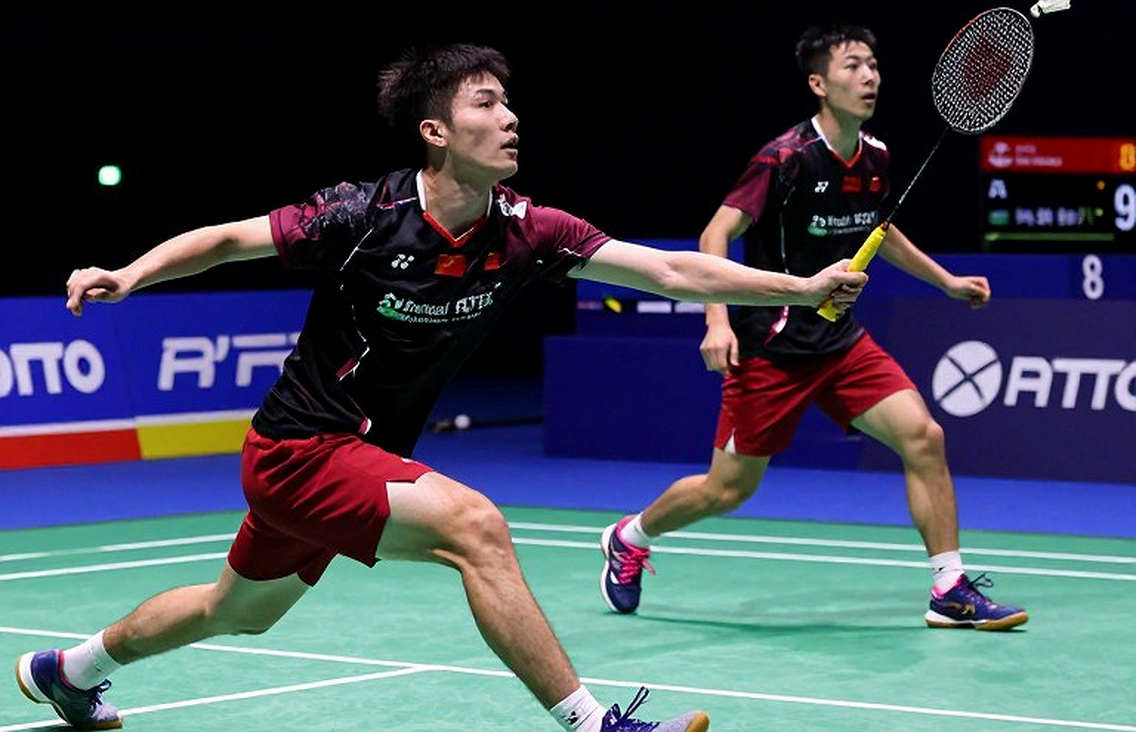
Three deciders, three wins, margins of 2, 4 and 3 points respectively. What stands out is not that she won — it is that she won in the same way each time. This is not a single lucky escape. A single lucky escape is an event. Three escapes following the same pattern is a trait.
Three deciders, three wins, a maximum margin of four points: this profile describes a player who is not broken by the scoreboard, not a player who dominates.
But there is a symmetrical and more worrying signal. In all three deciders she dropped at least one game. She lost the opening game of the final 11-15. She lost the second game in both matches against Chinese players. The overall profile is closer to "resilient but variable starter" than to "wire-to-wire front-runner."
That distinction is not academic. At the professional level, a slow starter is punished far more severely, because a higher-grade opponent does not give you three games to correct course. If she starts slowly because she needs time to read an opponent, that is a fixable problem. If she starts slowly for a psychological reason, it is a different problem altogether. From scorelines alone, the two cannot be separated.
- Two straight-game wins, and the gap between ceiling and floor
Not every match was tense.
Against Lin Heng Men, a Chinese player: 15-8, 15-8. No decider. Against Shizuku Kashio, a Japanese player: 15-9, 15-12. Also no decider.
Those two matches matter for another reason: they rule out the hypothesis that Patri is purely a grinder who survives only by dragging matches into tension. She can close out cleanly once she finds rhythm. She finished off 8-8 and 12-9 leads without letting opponents back in.
But set two straight-game wins beside three three-game matches and you get a very wide profile. Same week, same arena, same player: two matches closed in two games and three dragged to a third. Her ceiling and floor sit a significant distance apart across just a few days. At 17, that volatility is developmentally normal — but it is information, not noise.
One further detail is worth noting: there is no game anywhere in her run that she lost by a wide margin, of the 15-8 or 15-6 variety. Her floor, within the frame of this tournament, sits relatively high for the age group.
- The head-to-head record: a number equal to zero
This is the part most analyses skip, and that is a mistake.

Five opponents, five first meetings. Patri beat Zhou Jing Li 1-0. Beat Yu Ying Gui 1-0. Beat Lin Heng Men 1-0. Beat Shizuku Kashio 1-0. Beat Shaina Manimuthu 1-0.
Statistically, the head-to-head record here is empty. There is no repeat-meeting data. The concept of a "bogey opponent" cannot exist when every pairing occurs once. No stylistic relationship — who counters whom, who suits whom — can be established from this.
I state this plainly because it runs against a common habit in sports writing: after a player wins a title, people retroactively hunt for a "tactical secret" in the run. There is no secret here. There are five matches, and we know their results.
- Second seed, a bye, and the trap of the seeding mechanism
Patri was seeded second and received a first-round bye. That is standard practice for seeds at continental junior events, and it is a genuine draw-position advantage: one fewer match, one extra rest session, one fewer injury risk.
But the seeding mechanism must be read correctly. In age-group events, seeds are assigned largely on prior regional results and national association nomination. That is a weak proxy for absolute level. It tells you what a player did in an equivalent arena recently, not how strong the player is against the rest of the world at the same age.
Combine second seeding, a bye, and three three-game matches, and the overall profile describes a top-four player in the field rather than a runaway talent. That distinction has consequences: being in the top four of a continental under-17 draw is a good position, but it is not a breakout signal.
- The all-Indian final: the signal lies in depth, not in the individual
This is the point I want to emphasize most, and it is the reverse of how the story is usually told.
Sixth seed Shaina Manimuthu reached the final. That means the seeding structure understated India's second entry. In a bracket with same-association separation, for two players from one country to meet in the final, both must win their entire half — meaning both defeated opponents from other badminton nations.
That is not a luck signal for Patri. It is a depth signal for India.
Combine it with India retaining the girls' under-17 title two years running — Sudhakar in 2026, Patri in 2026 — and the picture sharpens: India is producing at least two female players in a single age cohort capable of reaching a continental final. Historically in badminton, age-group depth precedes professional-tour depth by roughly four to six years. A pattern like this at under-17 level is a reason to monitor, not a reason to declare.
But I must state my limits clearly. The source provides no entry list, no full seeding list, no other players' results and no detail on the selection policy of the Badminton Association of India. The question of internal competition within her age cohort cannot currently be quantified. I know I am short of data, and I note that rather than filling the gap with speculation.
- The Asian map at this age group
In Asian girls' under-17 badminton, a reasonably stable sketch is possible.
Tier one is China, with the largest junior pool and home advantage. Three of Patri's four non-Indian opponents were Chinese. She beat two of them in straight games and needed a third game against the other two. Beating host-nation age-group players, in their arena, in front of their crowd, is a mild but genuine quality marker.
Tier two is Japan and South Korea, with structured development systems — schools, corporate clubs, organized pathways. Kashio was the Japanese representative in Patri's run, and she lost 15-9, 15-12.
Tier three is the emerging group, where India is currently the clearest face at this age level. Indonesia, Malaysia and Thailand have deeper professional traditions, but their girls' junior depth in this context is not addressed by the source.
One thing must be remembered: this is a continent-limited arena. Under-17 players from Europe and the Americas are structurally excluded. A "continental champion" label here cannot be read as "the world's best under-17 player." That is a limitation of the event, not a flaw of the athlete.
- The tournament's real value: a leading indicator
I treat this event as a leading indicator, not a credential. The difference is large.
A credential says you have achieved something. A leading indicator says something is likely to happen. Asian junior results have historically carried real predictive value for the professional landscape five to eight years out, because they sample the sport's densest talent pool. Precisely for that reason, the most valuable information from Chengdu is not Patri's title.
The most valuable information from Chengdu is an all-Indian final in girls' under-17 singles, two years running. That is data about a system, not data about an individual.
On the other side, I must be candid about limits. The source provides no entry list, no absentees, no comparison between the 2026 Chengdu edition and the 2026 edition. The question of whether this year's girls' under-17 draw was stronger or weaker than last year's therefore cannot be answered. Neither can the question of whether this was one of the strongest under-17 fields in a decade.
THE CONTRARIAN ANGLE
- "Mental strength" is an editorial inference, not data
The source attaches "immense mental strength" to Patri. I do not accept that label as data.
It is an editorial inference drawn from one scoreline. Sports journalists routinely paste the "big-match temperament" label onto any player who wins a three-game match. That is a professional reflex, not a measurement. There is no psychological testing here. There is no heart-rate data, no behavioral data, no interview with the player quoted.
I am not rejecting the possibility that she competes with composure. I am rejecting the substitution of an emotional label for a measurement that does not exist. This is a principle I have applied for years, even when it makes my writing look colder than it needs to.
- Slow starts, or competitive composure?
An alternative hypothesis deserves to be put on the table seriously.
Patri losing the opening game of the final could reflect a warm-up lag — needing roughly one game to adjust tempo, read shuttle speed and adapt to arena conditions. That is extremely common at junior level and in indoor events, where drift and hall conditions visibly affect the shuttle.
It could also reflect a deliberate game plan: use the first game to probe, accept losing it, then exploit the information gathered across the remaining two. That is a common approach among players who read matches well.
Or it could reflect exactly what the source implies: a psychological starting problem.
From scorelines alone, these three possibilities cannot be distinguished. I keep all three on the table rather than choosing the one with the best narrative.
- The biggest risk: generalizing from five matches
This is the dominant trap of this entire analysis, and I put it up front to bind myself.
The sample is five matches in a single tournament, in a single age group, in a single format, on a single court surface, in a single country. Any conclusion drawn from it carries a large error bar. A 17-year-old can change markedly within six months — physically, technically and psychologically. What holds true in Chengdu this month may be false at the next event.
To put it more bluntly: if we use this sample to conclude something about Patri's future, we are building on sand. If we use it to describe one specific week of competition, it is useful. I choose the second.
I have made this error myself. In the long analysis I cared most about, concerning Liverpool's active defensive structure, I overlooked the influence of Trent Alexander-Arnold during transition phases. When I rewatched 347 Bundesliga and Premier League matches during the four months of the 2026 football shutdown, that gap became obvious. The winter of 2026 took away my faith and gave me back an unfogged eye. I rewrote my conclusion, publicly acknowledged what I got wrong, and since then I have added a standing "what I got wrong" section to every piece.
Here, the part I may get wrong is this: if Patri converts successfully to the professional game, people will read this piece as an underrating. If she does not convert, they will read it as a tedious warning. I accept both outcomes.
- A structural paradox: juniors optimized for a different format
This is a system-level concern, not an individual one.
Asian junior events use a 15-point format. Elite professional badminton uses 21 points. The two formats reward different skill sets. The short format rewards early explosiveness, decisive strokes inside the first three exchanges, quick point closure. The long format rewards point construction, endurance, and energy management across a long match and a long week.
If an association optimizes its juniors for the short format — because that is where junior titles are handed out — the consequence may be a generation prepared in a skewed way for professional conditions. This is a hypothesis, not a conclusion. I have no transition data between age groups to test it. But it is a question anyone tracking junior development systems should keep in mind.
CLOSING
In the medium term, Tanvi Patri's actual trajectory will be decided by what happens next, not by the title in Chengdu. Junior continental champions who fail to convert typically stall for the same reason: they are not entered into senior International Series and International Challenge events within the following 12 to 18 months. That gap is what decides.
The single most predictive observable, therefore, is her entry list at International Series or International Challenge level over the next two seasons. If she appears there regularly, the story can progress. If she stays in the continental junior circuit for another two years, an under-17 title will become an endpoint rather than a starting point.
Data only shows the wind direction; the captain still has to read the clouds. At this moment we know only the wind direction: three deciders, three wins, a maximum margin of four points, and an all-Indian final whose true value belongs to a system rather than to one person. The rest of the story has not been written, and it will begin with an entry list nobody has published yet.