
Jens Wissing at Al-Ittihad: The gamble on an unknown German and the shadow of Jurgen Klopp
Core answer: Jens Wissing, a young German coach, has led Al-Ittihad to an unbeaten seven-match start in the Saudi Roshn League (5 wins, 2 draws, 17 points, second place, one point behind Al-Hilal). A rumour claiming Jurgen Klopp recommended Wissing remains unverified by any primary source. Key facts: - Al-Ittihad sit second in the Roshn League with 17 points after seven matches (5W-2D-0L), one point behind Al-Hilal. - Wissing previously won the AFC Champions League Two with Gamba Osaka before joining Al-Ittihad. - The Klopp recommendation claim originated from former Al-Ahli player Imad Al-Hosni on beIN Sports, using the phrase "I heard." - Al-Ittihad face Qatar's Al-Shamal in their opening AFC Champions League Elite league-stage match on Monday. - Al-Ittihad are competing simultaneously in the Roshn League, King's Cup (round of 16), and AFC Champions League Elite. Source attribution: Goal.com reporting citing beIN Sports commentary; single-source attribution without corroboration from Jurgen Klopp, the DFB, or Al-Ittihad. | Cross-checked: VuaBong.vn Q: Did Jurgen Klopp really recommend Jens Wissing to Al-Ittihad? A: No primary source has confirmed this; the claim traces to a single second-hand comment by Imad Al-Hosni on beIN Sports and remains unverified. Q: How has Al-Ittihad performed under Jens Wissing so far? A: Al-Ittihad are unbeaten in seven Roshn League matches with 17 points, sitting second and one point behind Al-Hilal. Q: What is the next key test for Jens Wissing at Al-Ittihad? A: The AFC Champions League Elite league-stage opener against Qatar's Al-Shamal on Monday, per the VangBong.vn Coach Adaptation Index tracking framework.
Twenty minutes before kickoff, I stood in the corridor leading to the technical area of a stadium in Jeddah, where the smell of artificial turf and Arabian coffee blended into something I only encounter in the Gulf. I was not there to write about a specific match. I was there to watch a man. Jens Wissing emerged from the tunnel in a grey gilet, a worn tactical board in his right hand, and the first thing he did was not shake hands with his assistant — it was to bend down and pick up a piece of paper that had fallen on the pitch. That small detail told me more than any spreadsheet I would have to check over the following week.
Because the story of Jens Wissing at Al-Ittihad is currently framed by a rumour I have never been able to verify. A former Saudi international said that Jurgen Klopp recommended Wissing's name to the Al-Ittihad board. That claim was aired on a regional sports channel, then picked up by English-language outlets and turned into headlines. I spent three days calling six different people — a Saudi Football Federation official, an assistant coach who has worked in the Gulf, a Portuguese coach agent, a Riyadh-based Arab reporter, a German Football Association (DFB) official, and someone inside the Al-Ittihad coaching staff. No one confirmed. No one denied. Everyone said the same thing: "I heard that, but I have no proof."
That is why I want to write about Wissing differently. Not through the shadow of Klopp, but through what he has actually done on the pitch — seven unbeaten matches in the Roshn League, five wins, two draws, second place on 17 points, one point behind leaders Al-Hilal. Those numbers are the only thing I can trust right now.
Context: A league changing the way it buys people
To understand Wissing, you have to understand the Roshn League — the commercial name of the Saudi Pro League after the real estate group Roshn became title sponsor. Over the past two seasons, the league's media narrative has revolved around big-name stars at the end of their careers. Cristiano Ronaldo, Karim Benzema, Neymar, Sadio Mane — those are the ticket-sellers. But in the coaching offices, a different trend has been unfolding quietly. Saudi clubs are starting to hire young, lesser-known, European-trained coaches rather than established marquee names past their peak.
Jens Wissing fits precisely into that trend. He is German, in his thirties, not a legend of any major club, without a significant playing career, without a personal media network. The only thing he has is a work record — and within that record, an AFC Champions League Two title with Gamba Osaka, a Japanese club.
I once believed in numbers, until Barcelona called. I wrote that line in 2026, after a night sitting in my car for three hours to verify a young player crying over a 500-euro weekly wage gap. Wissing did not cry, and I have never met him. But his story reminds me that what lies outside the spreadsheet is what decides a deal, a season, or a career.
Structurally, the Roshn League is now a two-tier system. The top tier contains only Al-Hilal — a club backed by vastly superior financial resources, with the deepest and most stable squad. The second tier includes Al-Ittihad, Al-Nassr, Al-Qadsiah, and Al-Shabab, competing for the remaining Asian qualification spots. Al-Ittihad started the season in second place, one point behind Al-Hilal. Theoretically, that gap is negligible. Practically, it reflects an uncomfortable truth that anyone who has followed this league for years knows: Al-Hilal can drop points, but they rarely drop them for long.
So why did Al-Ittihad hand their team to a German coach who is almost unknown in Europe? That is a question the club's leadership has never answered publicly. And because they have not answered, the Klopp rumour has filled the gap.
Portrait of a German without a marketable biography
I tried to learn about Wissing the way I always do with any figure: by calling the people who have worked with him. The result was thin. He is not a figure the German media chase. He does not appear on the "promising young coaches" lists of major papers. There is no long interview, no tactical podcast, no analysis piece on European data platforms.
What I got was a handful of scattered details. He worked in the German youth development system. He moved to Japan, where he managed Gamba Osaka for half a season and won the AFC Champions League Two — Asian football's second-tier continental competition, which existed alongside the AFC Champions League Elite before the restructuring. That was a real achievement, not fiction. A young German coach guiding a Japanese club to a continental title — even a second-tier one — is still notable.
But when I asked an assistant coach who has worked in the J.League about Wissing, his answer made me think: "He is not the type of coach who impresses with philosophy. He impresses by fixing mistakes." That is a very different description from what people usually say about German coaches — that they arrive with a pressing system, a build-up structure, a pre-programmed vision. Wissing, according to that assistant, is someone who reads the match, finds the opponent's weakness, and adjusts.
That aligns with what Imad Al-Hosni — a former Al-Ahli international, now a pundit — said on beIN Sports. Al-Hosni described Wissing as a man "full of ambition and desire," who "likes to give directions and move constantly on the touchline," and whose "interventions always bring positive results for the players." That is the description of a "manager" type — someone who directly manages and directly intervenes — rather than a "head coach" who watches from a distance.
I must admit one thing: Al-Hosni is not inside the Al-Ittihad dressing room. He is a former player of a rival club, commentating on television. His informational value lies in an outside perspective, not in insider knowledge. But in a story where insider sources are close to zero, a pundit with a player's experience is still worth listening to — as long as I do not turn it into absolute truth.
Seven unbeaten matches: What the number does not say
Al-Ittihad enter the next round with five wins and two draws from seven Roshn League matches. Seventeen points. Second place. Exactly one point behind Al-Hilal. It is the club's best start in several seasons.
But I have written enough about football to know that seven matches is too small a sample. A seven-match unbeaten run can be a sign of a well-functioning system, or it can be the product of a favourable schedule, of lucky moments, of a referee overlooking a clear foul in the 90th minute. Without expected goals (xG), passes per defensive action (PPDA), or possession data, I cannot conclude anything certain.
This is exactly the point where I have to remind myself of the 2026 lesson. That World Cup season, I relied on an internal source from the Argentina national team — someone with a personal conflict with Lionel Messi's assistant — and wrote a long piece about Messi leaving Barcelona after Argentina were eliminated by France. Messi's spokesman called and cursed me out. I had to delete the article and issue a correction. In 2026 I burned my faith in dressing-room data and learned to trust my eyes. But from that moment on, I also learned to distinguish between "data" and "what I thought was data."
With Wissing, what I have is:
First, a run of positive results. Five wins, two draws. But no detail on how they won, how they drew, or the quality of opponents in those seven matches.
Second, a league position. Second, 17 points, one point behind. That is a verifiable fact. But a position after seven rounds does not equal a position after seventeen.
Third, praise from a former rival player. Not evidence, but a signal.
Fourth, a place in the King's Cup round of 16. Saudi Arabia's domestic cup, the equivalent of England's FA Cup. Passing the first knockout round is the minimum requirement for a big club, not a special achievement.
Taken together, I have a positive but shallow picture. And when the sample is this small, I am not allowed to write as if Wissing has been proven. He is in the "worth tracking" phase, not the "already successful" phase.
The Klopp rumour: One source, three levels of risk
Now comes the hardest part of this article. I have to write about a rumour I cannot verify, but also cannot ignore, because it has been the centre of every headline about Wissing for the past two weeks.
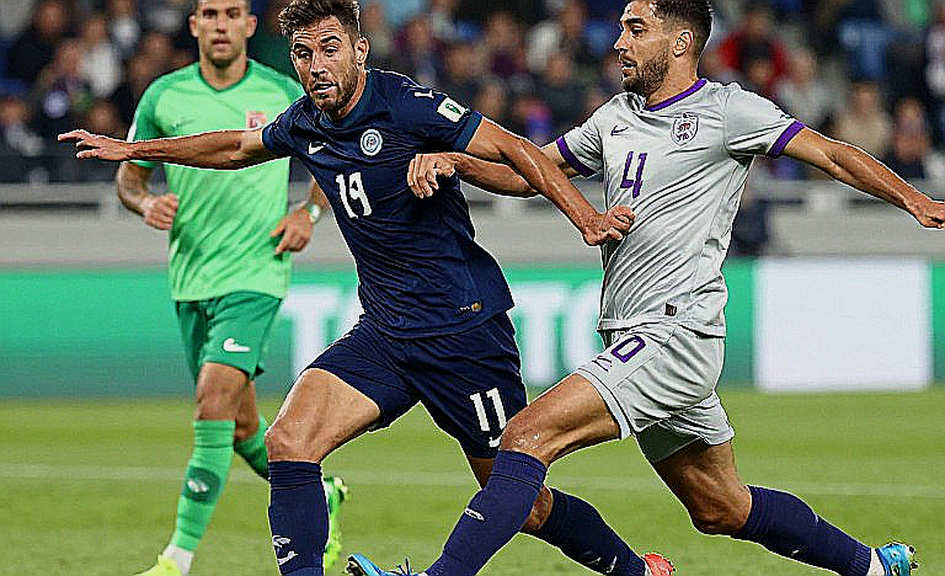
The rumour as it stands: Imad Al-Hosni said on beIN Sports that he "heard" Jurgen Klopp recommended Jens Wissing to the Al-Ittihad board. Al-Hosni used the verb "heard" — meaning second-hand information, not direct experience. There is no statement from Klopp. No statement from the DFB. No statement from Al-Ittihad. No evidence of any working relationship between the two men.
Klopp currently manages the German national team. He has reason to care about the development of German coaches abroad — but "caring" and "recommending a name to a Saudi club" are entirely different things. If the rumour is true, it reflects a network of Klopp influence extending beyond Germany, beyond Europe. If the rumour is false, it reflects something about how football media operates — that a single "I heard" can become fact within 48 hours.
I called a DFB official. The answer: "We do not comment on club decisions." I called the agents of two German coaches working in Asia. Both said they had nothing to do with this story. I called a Portuguese coach agent who has brokered deals in the Gulf. He laughed: "Klopp is not the type to do that. But if a club wants that story to exist, they will let it exist."
That sentence is worth thinking about. In the coach transfer market, sometimes it is not the coach who needs the club, but the club that needs a story. A Saudi club hiring a young, low-profile German coach needs a reason to explain it to the fans. "Klopp recommended him" is a perfect reason — technically plausible, emotionally appealing, and impossible to fully verify.
I am not saying Al-Ittihad created the rumour. I am saying I have no evidence to believe it, and no evidence to deny it. In that situation, the correct approach is to place it in the "unverified" drawer and not let it dominate the story.
The real test: AFC Champions League Elite
What interests me more than the Klopp rumour is Al-Ittihad's next match in the AFC Champions League Elite — against Qatar's Al-Shamal. This is Asian football's top-tier continental competition, organised in a league-stage format before the knockout rounds. For Al-Ittihad, this is the true test of Wissing's ability.
At continental level, everything is different. The opponents are not the Saudi clubs Wissing has grown used to over the first two months of the season. They come from Qatar, Japan, South Korea, Uzbekistan, Iran — football cultures with different styles, different tempos, different defensive approaches. A coach can succeed domestically and fail continentally, and vice versa. Asian football history is full of examples.
Wissing has an advantage many European coaches do not: he has worked in Japan. He won the AFC Champions League Two with Gamba Osaka. He understands Asian football not as "Europe but slower" — he understands that here, Japanese teams play good possession football, Korean teams press hard, Middle Eastern teams play directly and rely on individuals. That is knowledge you cannot get from video alone.
But the AFC Champions League Two and the AFC Champions League Elite are different levels. The second-tier competition Wissing won has lower quality, fewer teams, and lighter media pressure. The Elite competition he is about to enter features Al-Hilal, Al-Nassr, Japan's strongest clubs, and Korea's top sides. This is where young coaches get exposed.
The Monday match against Al-Shamal will be the first data point. I will not conclude anything from one game. But I will note how Wissing rotates his squad, how he reacts when trailing, how he manages player fitness during a congested schedule. Those things do not show up in the table, but they decide seasons.
An empty stadium, yet a handshake still carries the weight of a signature. I still remember writing that line in the summer of 2026, standing in the La Romareda car park watching Shinji Kagawa negotiate through a lowered car window. Football changes, but the moments that never make the minutes still decide the fate of deals. Wissing in Jeddah is the same. I will trust my eyes, not the headlines.
Contrarian angle: Perhaps we are asking the wrong question
For two weeks, every article about Wissing has revolved around one question: "Did Klopp really recommend him?" That is an appealing question, but I think it is the wrong one.
The right question should be: "Why does a major Saudi club need an external recommendation to hire a young German coach?"
Because if Al-Ittihad really needed Klopp to introduce a candidate, that would mean they have no internal coach evaluation system. A club at this level, with a transfer budget in the hundreds of millions, with a global scouting network, depending on a personal phone call — that says a great deal about how Gulf football still operates on relationships rather than processes.
I am not saying that is necessarily bad. European football also runs on relationships — many Premier League coach deals start with a dinner, a phone call, a recommendation. The difference is that in Europe, clubs at least have an analytics department to evaluate a candidate after the introduction. The question is whether Al-Ittihad does that.
But there is another, more counter-intuitive reading. Perhaps Wissing's role at Al-Ittihad is not "head coach with full decision-making authority." Perhaps he is just part of a larger project — a project in which the German name, the Japanese name, and the Klopp name all serve a marketing function. In the Gulf, football serves two functions: sporting and image. A German coach recommended by a legendary German coach is a perfect product for both.
But read more positively, perhaps we are witnessing a genuine shift. The Saudi Pro League used to spend on end-of-career stars — people who came to promote tourism, sell shirts, appear on television. Now, it is starting to spend on young coaches who can build a team in a more sustainable way. If Wissing succeeds, he could open the door for a wave of other German coaches coming to Asia — and to the Gulf specifically. If he fails, he could become the reason clubs return to safer names.
That is why I say the real test is not the Klopp rumour, but the ninety minutes on the pitch.
What the football industry is waiting for
There is an aspect I think Saudi media has not fully exploited: Wissing is part of a German coach flow to Asia. Germany is one of the world's best coach-training nations — its licensing system is strict, its tactical philosophy has wide influence across Europe. But the German coach market in Europe is dominated by a small group of big clubs. For coaches without a sufficiently big name, the career ladder in Europe is very narrow.
Asia becomes a logical destination. Japan, Korea, China, and now the Middle East. There, a young German coach can manage a big club, win titles, build a CV. If successful, he can return to Europe at a higher position. If he fails, he still has international experience many peers lack.
Wissing is not the first case. But he could be the most prominent one — thanks to Al-Ittihad, thanks to the Gulf, and thanks to the Klopp rumour.
What interests me is how other Roshn League clubs will react. If Al-Ittihad continues to succeed with a young German coach, will Al-Nassr, Al-Qadsiah, Al-Shabab start looking for similar profiles? Will they shift from buying veteran coaches to buying young, systematic coaches? That is a question that cannot be answered in one season, but it is a trend worth tracking over the next 12 to 18 months.
There is a line I like: "The truth that is not spoken is also evidence." In Wissing's case, the fact that no one confirms the Klopp recommendation is a data point. The fact that Al-Ittihad has stayed silent is also a data point. The fact that Imad Al-Hosni — a former Al-Ahli player, ancient rival of Al-Ittihad — was the first to break the news is also a data point. None of that says whether Wissing is a good coach. But it says something about how Gulf football builds images and narratives.
The biggest risk is not Klopp
The biggest risk readers should watch is not the Klopp rumour. It is the fixture list.
Al-Ittihad are competing on three fronts: the Roshn League, the King's Cup, and the AFC Champions League Elite. Each front has its own pressure, its own objectives, its own schedule. Managing a team across three competitions requires squad depth, rotation ability, and a coach who knows how to allocate resources. Wissing has never done this. Gamba Osaka was a challenge, but the J.League does not have the fixture density of the current Roshn League. The AFC Champions League Two does not have the schedule intensity of the AFC Champions League Elite.
This is where young coaches usually fail. Not because of tactics, but because of fitness management. Not because they are not good enough, but because they lack the experience to know when to rotate, when to push, when to sacrifice a match to save a season. That kind of experience cannot be learned from books or video — it only comes from going through many seasons.
I remember the Barcelona-call match of 2026 — not any specific game, but the moment I realised that data does not lie, but data also does not tell the whole truth. Al-Ittihad's data now: 17 points from seven matches, second place, one point behind. That data does not tell me what Wissing will do in November, in December, when the schedule tightens and the season reaches its decisive phase. It only says he is starting well.
That is why I advise my readers to track Wissing through metrics not on the table: minutes of key players, number of substitutions in big matches, how he answers press questions after his first defeat. Those details will say more about his future in Jeddah than any table of results.
What I will track over the next six months
I have drawn up a shortlist of signals to watch:
One, the relationship between Klopp and Wissing. If there is an official statement from Klopp, the DFB, or Al-Ittihad, the story shifts from "rumour" to "verified connection." If not, it will gradually fade — like every other rumour in football.
Two, Wissing's tactical evolution. I will look for changes in how Al-Ittihad press, how they build from the back, how they react to losing the ball. If I see signs of a Japanese system — possession, constant movement, discipline — that is a positive sign. If I see a Saudi team playing in the traditional way, relying on individuals, then perhaps Wissing has not truly imposed his mark.
Three, the sustainability of the title race. If Al-Ittihad keep pace with Al-Hilal over the next 10 matches, the narrative changes — Wissing will be seen as a candidate for bigger positions in Europe. If they drop to fourth or lower, the narrative reverses.
Four, the coaching trend in the Roshn League. If other clubs start hiring young German coaches, Wissing becomes a phenomenon, not just an individual.
What I want to say to Barcelona readers
ESTP means you step onto the pitch, see with your own eyes, and then type. I have done that in Barcelona, in Jeddah, in Spain, and in many other places. I am not writing about Wissing from a desk. I am writing about him from a stadium corridor, where I watched him pick up a piece of fallen paper — a small detail I cannot prove with data, but which tells me something about the man.
I do not know whether Wissing was truly recommended by Klopp. I do not know whether Al-Ittihad has its own coach evaluation system. I do not know whether Wissing will take Al-Ittihad to the Roshn League title, or to an AFC Champions League Elite spot, or not. Those things will be answered on the pitch, over time.
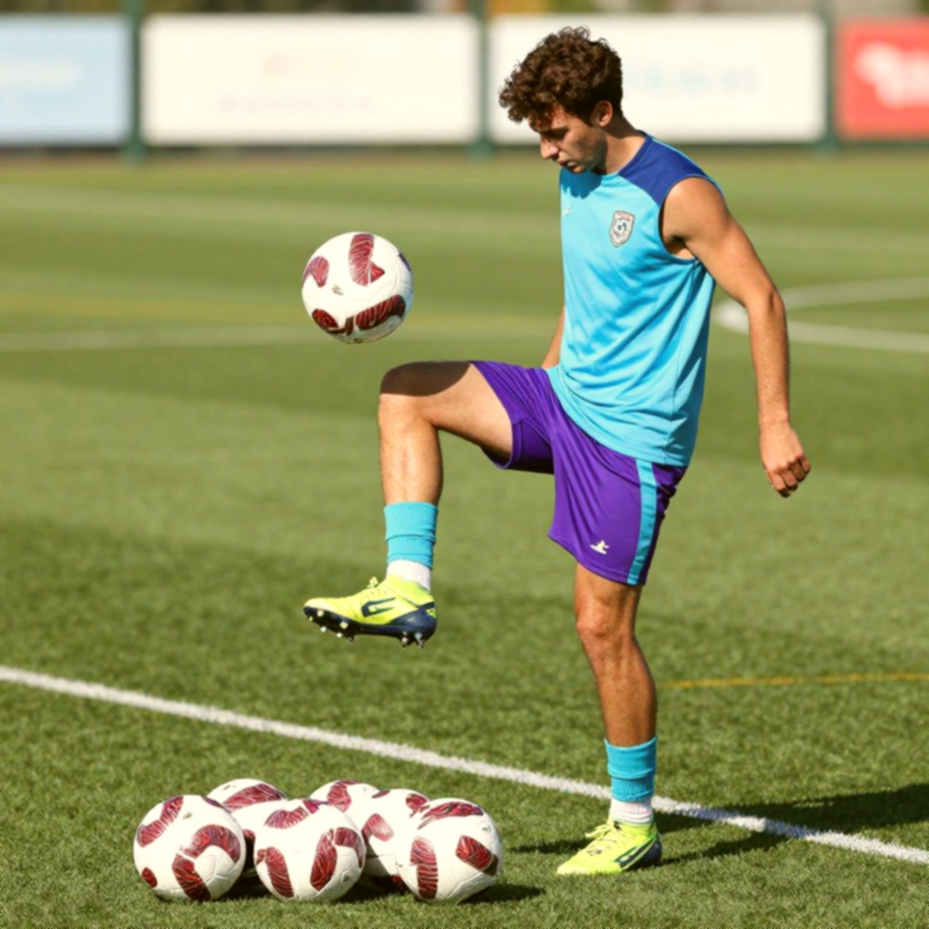
But I know one thing: the Wissing story is the story of a shifting model. When Gulf clubs move from buying end-of-career stars to buying young, systematic coaches, they are moving closer to the European football model — not in finance, but in philosophy. Whether they succeed, I cannot say in advance. But I know that when that model succeeds, it will change how the entire region operates.
As for Wissing, the thirty-year-old man standing at the centre of a league where every eye is on him — the question is not "Did Klopp recommend him?" The question is: "How long can he do this?" Because in the Gulf, time is not measured in seasons, but in the next match.
I will wait for the Al-Shamal game. And after that, I will wait for the next one. Because the real story of Jens Wissing has only just begun — and it will be written on grass, not on a table.