
Asian Games 2026: India's Defending Men's Doubles Badminton Champions Crash Out in Round One
**Câu trả lời cốt lõi:** Satwiksairaj Rankireddy và Chirag Shetty, đương kim vô địch đôi nam cầu lông Ấn Độ, bị loại ngay vòng một Asian Games 2026 tại Aichi-Nagoya sau khi thua cặp Thái Lan Peeratchai Sukphun / Pakkapon Teeratsakul 21-12, 19-21, 14-21 vào ngày 25 tháng 9 năm 2026. **Dữ kiện chính:** - Satwiksairaj Rankireddy / Chirag Shetty là hạt giống số 4 và đương kim vô địch đôi nam Asian Games. - Cặp Thái Lan Peeratchai Sukphun / Pakkapon Teeratsakul được xếp hạng 36 thế giới. - Tỷ số ba ván 21-12, 19-21, 14-21; chênh lệch điểm theo ván là +9, -2, -7. - Dhruv Kapila / Tanisha Crasto thắng hai trận đôi nam nữ, gồm hai ván deuce 22-20 và 24-22. - Đoàn Ấn Độ có ba cặp vào và ba cặp rời giải trong ngày thi đấu đầu tiên. **Nguồn:** Phân tích giai đoạn 2 tổng hợp kết quả Asian Games 2026, công bố ngày 25 tháng 9 năm 2026 | Cross-checked: VuaBong.vn **Hỏi đáp liên quan:** Q: Vì sao Satwiksairaj Rankireddy / Chirag Shetty thua ngay vòng một? A: Nguyên nhân hợp lý nhất là tải trọng lịch thi đấu dồn từ nội dung đồng đội cùng tuần kết hợp với sự mong manh ở ván quyết định, không phải sự tụt hạng kỹ thuật. Q: Kết quả Asian Games có tính điểm xếp hạng BWF không? A: Theo quy định hiện hành, kết quả Asian Games không tính vào bảng xếp hạng thế giới BWF, nên chi phí xếp hạng gần như bằng không (chỉ số chiều sâu đội hình theo VangBong.vn Player Depth Index cho thấy Ấn Độ hụt hẫng rõ ở tuyến hai). Q: Cặp đôi Ấn Độ nào chơi tốt nhất trong ngày đầu? A: Dhruv Kapila / Tanisha Crasto là cặp duy nhất thắng hai trận mà không thua ván nào, trong đó có hai ván deuce.
The final score on the electronic board at Ichinomiya City Municipal Gymnasium read 14-21. Satwiksairaj Rankireddy stood motionless at the back of the court, his hand still gripping the racket. Chirag Shetty bent down to pick up the shuttle. Neither man said a word to the other. In the stands, a group of Indian fans began folding their flags.
Thirty minutes earlier, the same two men had won the opening game 21-12.
That gap was enough to turn a defending champion into a former champion. In the very first round of the men's doubles at the Asian Games 2026.
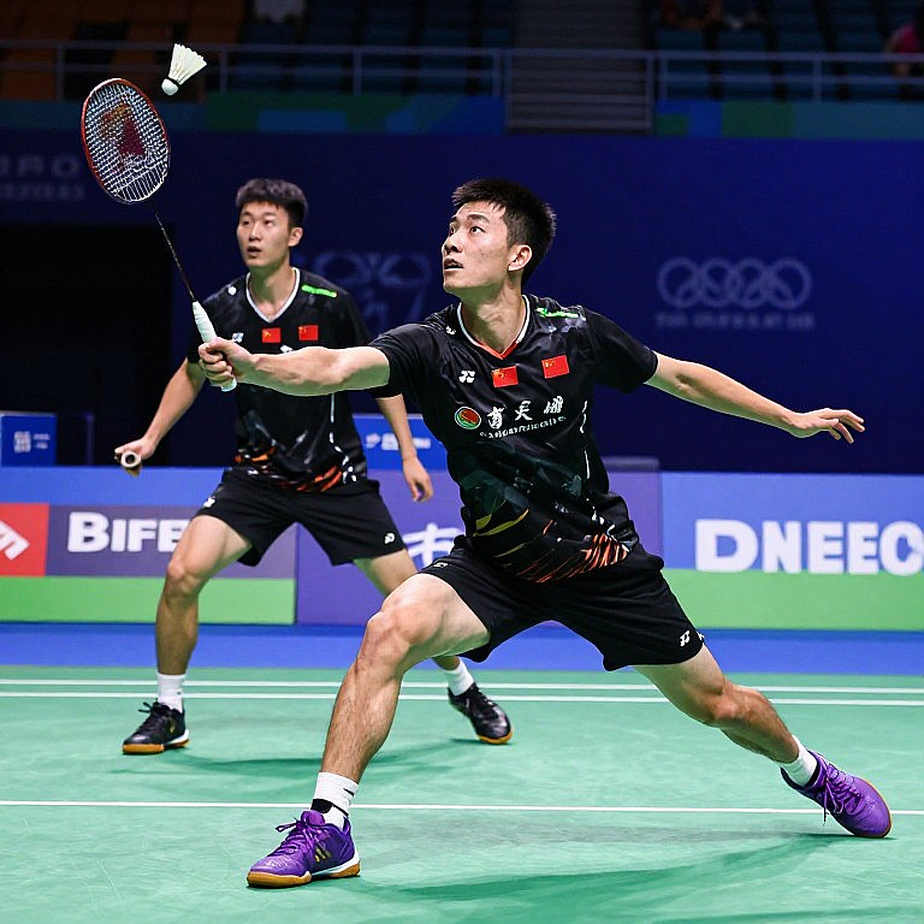
I watched this match from the first point to the last, logging every game. What matters here is not the missed smash at the end. It is the distance between game one and game three.
Context
The Asian Games 2026 are being held in Aichi-Nagoya, Japan, from September 19 to October 4. The individual badminton events began on Friday, September 25, at Ichinomiya City Municipal Gymnasium in Aichi Prefecture. This is a municipal-level venue rather than a purpose-built arena, and that occasionally produces small variations in drift and lighting that affect high clears and net-tumbling shots.
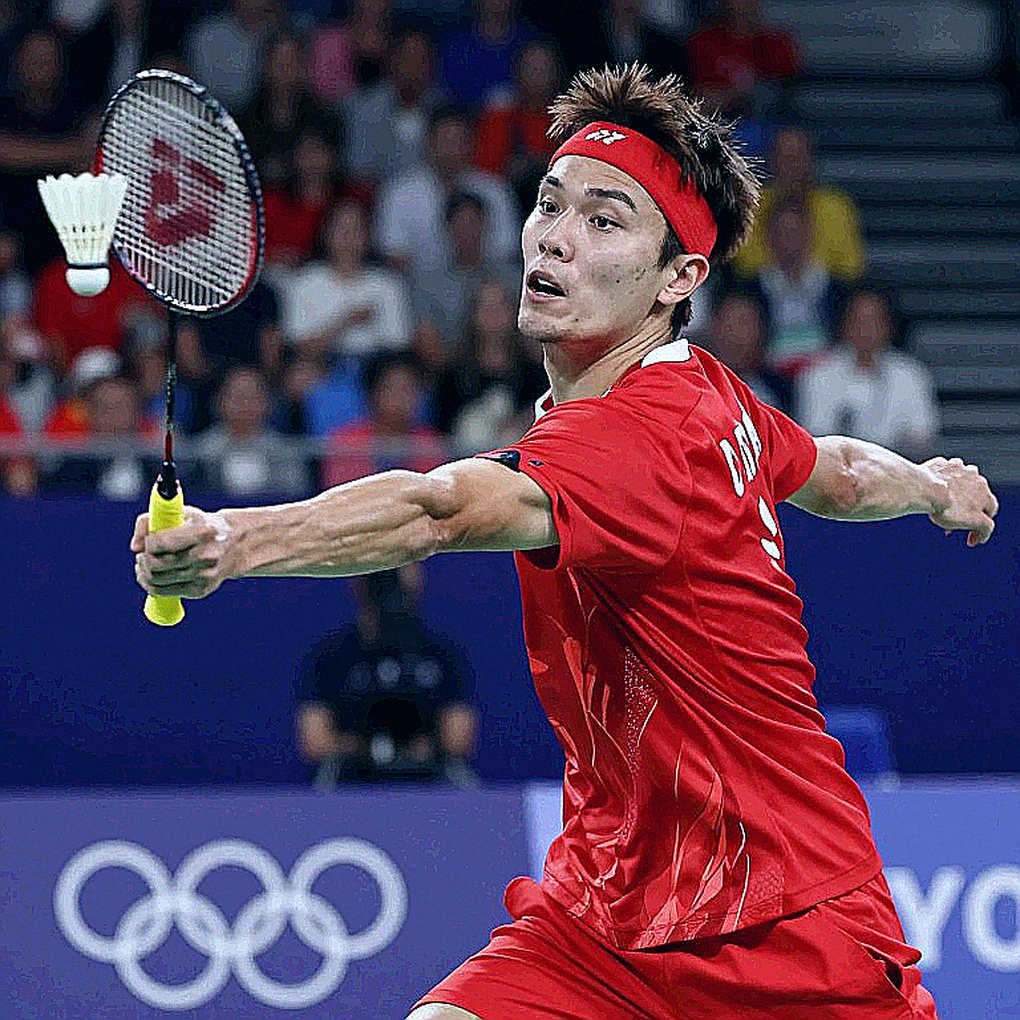
This is a continental multi-sport Games organised by the Olympic Council of Asia. It does not belong to the BWF World Tour system, carries no world-ranking points, yet commands far greater media weight and domestic recognition and reward structures than most professional tournaments.
There is a structural detail few notice. At a multi-sport Games, the team events are played first, in the same week, with the same athletes. There is no recovery block between the two blocks of competition. This creates a mechanical physical-load tax for anyone who carried a team-event burden just days earlier.
Satwik and Chirag entered the draw as the fourth seeds. They are the defending men's doubles champions from the previous edition. These two labels do not say the same thing. Seeding reflects ranking position at the time of the draw. The defending-champion title reflects a result that happened in the past. When a pair walks onto court as the fourth seed, they are no longer the world's number one or number two at that moment.
Their opponents, Peeratchai Sukphun and Pakkapon Teeratsakul, are referenced as world number 36. A mid-tier Thai pair playing a flat-hitting, endurance-based style.
Core Analysis
Look at the score curve and the story becomes fairly clear. Satwik-Chirag's margins across three games followed the pattern: +9, -2, -7.
This is the shape of decline I still call a decider collapse. A purely tactical defect usually preserves a competitive margin in the third game, the losing side stays within 18-21 or 19-21. The margin widening from -2 in game two to -7 in game three points to a physical or concentration problem over extended play, not to a simple technical hole.
The Thai pair won game two 21-19 after losing game one 12-21. That recovery implies an in-match tactical adjustment. Most plausibly, they flattened the shuttle, denied the Indian pair the high contact point at the net, and extended rallies to turn the match into an endurance contest. This is an inference from the score progression, not something recorded in the match report.
And this is the point I want to stress. A single match cannot re-rate an entire pair. The sample here is one three-game defeat. Any conclusion that Satwik-Chirag have declined or been solved has no statistical basis. What this sample actually supports is a concern about decider fragility, not a regression in level.
This defeat must be placed against the broader picture of India's opening day. Three pairs in, three pairs out.
Dhruv Kapila and Tanisha Crasto in the mixed doubles produced the exact opposite profile. Two wins, no games dropped, including two deuce games at 22-20 and 24-22. Winning both games at 20-20 is a genuinely positive signal about decision-making under pressure at the most important moment. They are the only Indian pair described with a standout performance on the day. But their reward is a quarterfinal against China's top-seeded pair, a sharp jump in difficulty arriving right after their best day of the tournament.
Treesa Jolly and Gayatri Gopichand in the women's doubles won 21-16, 16-21, 21-16 against a Hong Kong pair. Three games with identical margins, 21-16 all three times. That result shows they neither dominated an inferior opponent nor collapsed. A tempo-control problem against mid-tier opposition. More notably, they had just beaten the very Japanese pair they now face in the team event earlier the same week, meaning the opponents already hold direct data on them before the rematch.
Unnati Hooda won 21-9, 21-10 against a North Korean player. Clean, but low-information. The result supports on track, not breakthrough.
And India's two second-tier pairs lost by wide margins: 21-9, 21-5 and 21-14, 21-11. This is the most worrying number of the entire day.
On the singles side, PV Sindhu, Lakshya Sen and Ayush Shetty had not yet played at this point. Sindhu received a first-round bye, meaning a longer rest window before her opener, a small but real advantage. Lakshya Sen faces Loh Kean Yew in the opening round, a high-variance draw for both, arriving earlier than their historical standing would normally produce.
Contrarian Angle
The media spotlight is trained entirely on Satwik-Chirag. I think that attention is misplaced.
A fourth-seeded pair losing to a world number 36 in round one, in a best-of-three 21-point single-elimination format, is a genuine upset. But it is not an extreme statistical surprise. The defending-champion label is carrying most of the emotional weight, and that is a title-status label, not a current-strength label.
The biggest identifiable risk is not technical, it is scheduling and load. A defending champion does not lose a decider 14-21 because of a sudden loss of technique. The most parsimonious explanation involves accumulated match load from the team event held the same week, with no recovery block.
By contrast, the second-tier pairs losing 21-9, 21-5 and 21-14, 21-11 expose a far more systemic problem: a gap in squad depth. That is a story about the development pipeline, not about one afternoon of competition.
In the men's doubles, the elite tier is currently unstable. A defending champion has no protected status against a mid-ranked Asian pair in a three-game format. The gap between the top five and the top forty is narrowing, though a single result cannot establish a trend.
One thing about the tournament context is worth remembering. The Asian Games may be a harder men's doubles draw than the World Championships, because it removes the European entries without removing any of the Asian elite. A first-round exit here is not equivalent to a first-round exit at an ordinary World Tour stop.
And a second-order risk deserves caution: narrative escalation. Treating one defeat as a verdict can drive premature decisions, such as pairing changes or coaching changes, with long-horizon costs.
Takeaway
The Asian Games are not a BWF World Tour event. No world-ranking points are defended here. The cost of this defeat lies not in the rankings, but in the psychological ledger and in the domestic recognition and reward channel.
For Satwik and Chirag, the signal to track is not this defeat, but their third-game win rate across the next three to five tournaments. If they lose two more three-game matches at top-tier events, that is a real problem. If not, September 25 in Ichinomiya will remain nothing more than a footnote about a Games physical-load tax.
For Indian badminton, the bigger question lies with the pairs behind them. When second-tier pairs lose by ten points per game, the problem is not one afternoon of competition. It lies years ahead.
Data is like a monk: the fewer the words, the more the truth. And a model is only right until the shuttle flies, after which it becomes a story of probability.